

Methane emissions in the North Sea Symposium
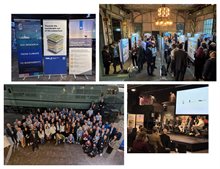
UTRECHT – The phase-out of the oil and gas sector calls for extra attention to safety and environmental protection concerning abandoned wells in the North Sea. These wells must be properly sealed to prevent methane, a powerful greenhouse gas, from escaping into the atmosphere. Since knowledge about the causes of methane emissions and possible mitigation measures is still evolving, State Supervision of Mines (SodM), the Royal Netherlands Institute for Sea Research (NIOZ), and TNO Geological Survey of the Netherlands (TNO-GDN) organized a symposium on methane emissions in the North Sea on November 13 and 14. The symposium was held at the Railway Museum in Utrecht.
SodM–NIOZ–TNO: ‘Methane emissions in the North Sea often linked to shallow natural gas’
During this two-day event, international experts shared their latest insights on the origin and migration of methane. Sessions addressed methane measurement and monitoring, including natural and human-induced emissions, as well as well-integrity and aftercare. The main focus was to understand the scale of methane emissions and explore ways to prevent them.
Methane Regulation
The symposium also addressed the recent 2024 European Methane Regulation. This regulation sets rules for measuring, monitoring, reporting, verifying, and reducing methane emissions in the energy sector. SodM has been provisionally designated as the supervisory authority by the Ministry of Climate and Green Growth (KGG).
Research Project
The symposium is part of a joint research project by SodM, NIOZ, and TNO-GDN on methane emissions in the North Sea. The project, that started in 2022, has provided insights into possible causes and the scale of leakage. It also explored ways to organize preventive and aftercare measures.
Initial research results show that methane emissions are often associated with the presence of shallow natural gas. In the Dutch part of the North Sea, the share of abandoned wells leaking shallow gas is less than two percent.
Read the first research results: Bubble plumes at abandoned wells and at natural seepage sites in the Dutch North Sea
Key conclusion
A key conclusion is that large-scale offshore monitoring, while technically complex, proves feasible in practice. The knowledge gained aims to help minimize methane emissions from abandoned wells and ensure a safe and sustainable future for the North Sea.
More information?
-

Martin Wilpshaar
Functie:Senior Geology AdvisorSpecialisatie niet bekend